
13F Securities List: What It Is, What’s Included, and How to Use It for Accurate Form 13F Filings
If you file Form 13F (or help someone who does), your Information Table is only as good as the list you check it against.
That list is the SEC’s Official List of Section 13(f) Securities (often called the “13F securities list”). It’s the definitive source of truth for what counts as a reportable 13(f) security each quarter.
In this guide, you’ll learn:
What the 13F securities list is (and why it matters)
What’s typically included vs. excluded
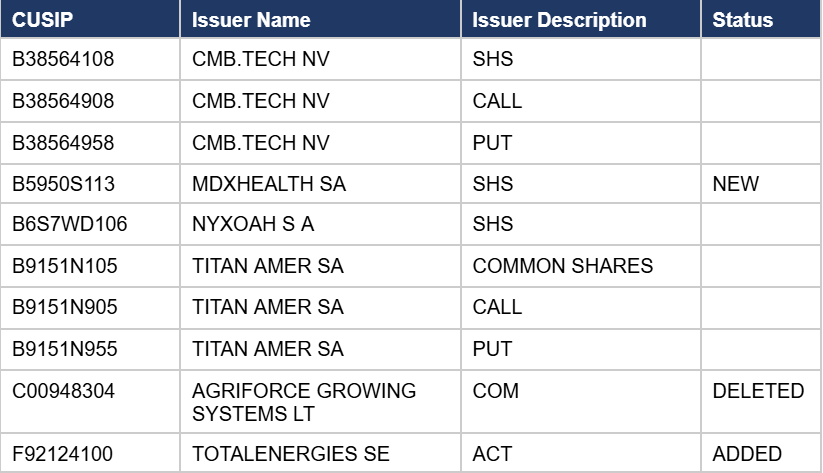
How to read the list (CUSIP, issuer/class, status flags)
A simple workflow compliance teams use to reduce errors
Key deadlines and FAQs
What is the 13F securities list?
The 13F securities list (officially called the SEC’s “Official List of Section 13(f) Securities”) is the list the SEC publishes every quarter that tells filers exactly which securities are considered “Section 13(f) securities” for Form 13F reporting.
Here’s the easiest way to think about it:
If a holding appears on the SEC’s Official List for the quarter you’re filing, it’s generally reportable on Form 13F (subject to the Form 13F instructions and permitted omission rules).
If it doesn’t appear on the list, it generally should not be reported.
Important 2023+ Form 13F updates (quick check):
Report values are rounded to the nearest dollar (not in thousands).
CUSIP is required; FIGI is optional.
Confidential treatment requests must be filed electronically via EDGAR.
Who needs to use it?
Form 13F filing obligations generally apply when an institutional investment manager exercises investment discretion over $100 million or more in Section 13(f) securities. The key detail: the $100M test is based on the aggregate fair market value of Section 13(f) securities on the last trading day of any month in a calendar year. Once that threshold is crossed, it can trigger Form 13F filing obligations and a quarterly filing cadence.
Helpful SEC guidance: Frequently Asked Questions About Form 13F
Related ACN reading:
What’s included (and what’s excluded)?
The SEC’s Official List is primarily made up of exchange-traded equities and certain related instruments that meet the SEC’s Section 13(f) criteria.
The best approach is not to guess. Check each holding against the Official List for the quarter you’re filing. That one step prevents most errors.
Common inclusions (high level):
U.S. exchange-listed equities (e.g., NYSE and Nasdaq)
Certain exchange-traded products (as reflected in the list)
Certain listed options (put/call), warrants, and rights (when included on the list)
Common exclusions (high level):
Holdings not on the Official List for the quarter
Open-end funds (mutual funds) – commonly excluded from 13F reporting
Short positions – Form 13F covers long holdings only
Sample 13F securities list table
Below is a short sample to show the fields you’ll see in the SEC list. For the full official list, see the next section.
Get the full 13F securities list (official SEC source)
The SEC publishes the Official List quarterly in PDF and TXT format. You can access the current quarter and archives here: Official List of Section 13(f) Securities
How compliance teams use the list (simple workflow)
Pull the correct quarter list: Match the list to the quarter you’re reporting. Don’t validate Q4 holdings against a Q1 list.
Normalize holdings data: Clean CUSIPs (9 characters), issuer/class fields, and option indicators before matching.
Match by CUSIP first: CUSIP matching is the most reliable approach; then validate with issuer/class description.
Review “not on list” holdings: Holdings not on the list generally should not be reported; flag for review before filing.
Apply omission rules carefully: The SEC permits omission of certain small positions when the aggregate fair market value is less than $200,000 and the position is fewer than 10,000 shares – but only if specific conditions are met. See the SEC’s Form 13F FAQ for details.
Final review and EDGAR readiness: Check formatting, totals, and filing type (Holdings, Notice, or Combination) before submission.
ACN handles this process as part of our filing service – list validation, CUSIP matching, and EDGAR formatting are all part of what we do each quarter on your behalf.
Deadlines (what to remember)
Form 13F is due within 45 days after each calendar quarter-end. If the deadline falls on a weekend or federal holiday, the due date rolls to the next business day.
SEC reference (deadlines + examples): Frequently Asked Questions About Form 13F
FAQs
Q: Is the list available in Excel?
A: The SEC provides the list in PDF and TXT format. It is not provided as CSV or Excel.
Q: How do I know if a security is reportable?
A: Validate the holding against the SEC’s Official List for the quarter you’re reporting.
Q: What do ADDED / DELETED mean?
A: They flag securities that entered or left the official list compared to the prior quarter. Use them to catch corporate actions and list changes.
Ready to hand off your 13F filings?
ACN has handled Form 13F filings since 1999 and files more 13Fs per quarter than any other agent. You provide your holdings data, we handle the rest – list validation, EDGAR formatting, and submission.
File your first 13F with ACN at no charge – no commitment required
Quarterly deadlines, backfiling, and edge cases all handled
Email-based service – straightforward, with no unnecessary overhead
Disclaimer
The information provided in this blog post is for general informational purposes only and does not constitute legal, compliance, or financial advice. ACN Solutions LLC is not a law firm, compliance advisor, or affiliated with the Securities and Exchange Commission (SEC). While we strive to provide accurate and timely guidance based on publicly available SEC resources, we do not speak on behalf of the SEC and are not authorized to interpret its rules or policies. Readers should consult their legal counsel or compliance professionals for specific guidance related to their regulatory obligations.